
UMSI alumna Jackie DiOrio: “One class shaped my career in records management”

Wednesday, 08/06/2025
When Jackie DiOrio (MSI ’13) enrolled in a class in records management with archivist and clinical associate professor David Wallace, she didn’t know it would open the door to every job she’s had since. “That class, having that experience, has been how I’ve gotten all my jobs,” she says.
Now a records manager for Caltrain, DiOrio oversees the digital backbone of a vital link in the Bay Area’s regional rail network. Her work involves preserving design and construction records, streamlining archival systems and ensuring future stakeholders know what was built and why.
Her career has spanned public universities, private archives and database administration, but one thing has remained constant: a commitment to keeping information accessible, orderly and alive.
In this Q&A, DiOrio offers an in-depth look into the UMSI skills and experiences that continue to serve her career growth in records management. She also shares an important piece of advice for job seekers — a tiny moment in one early interview that still echoes in her mind today.
UMSI: What do you do in your current position?
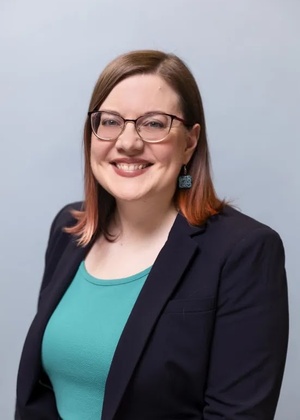
Jackie DiOrio: I work for Caltrain, which is a transit agency in the Bay Area. We run a train that goes from San Francisco to Gilroy, which is a little south of San Jose, California. I do document control and records management, so I work in Caltrain’s design and construction department. It’s my job to make sure that we are maintaining all of the records that we need to keep for the long run so down the road people know what we built and why we built it that way.
What did you do for work before this? How does that experience compare with what you do now?
Right out of grad school I was at Marshall University in West Virginia working as an archivist and records management librarian. They were a smaller unit, so I was doing a lot of different things. Then I moved to the University of California Office of the President, where my work was kind of half records management, half running the archive. I was part of the group that ran the archive for the Office of the President, which was a database. I also provided records management services to the Office of the President, which oversees the full UC system. Now I’m doing more pure records management, compared to that position.
What does a day in your life look like in your current position?
Right now I’m trying to do a variety of things. I run a database called OnBase, which I also ran at the University of California. It’s where we keep our archival records, and it’s a little bit different than some of the stuff I learned in school — it’s more of a private archive. A lot of what we did at UMSI was more focused on public archives. So far, both of the archives I’ve run have been more private.
A lot of what I’ve been doing recently involves trying to make improvements in OnBase so that the users like it better, and also fixing some bugs we’re experiencing. I’m also trying in general to unite our larger department and ensure that our records processes are all how we need them to be, that we’re saving everything, that we know the life cycle of each record from where it starts to where it ends.
So my average day, I’m having some meetings related to that. I’m having meetings regarding some of the work I’m doing in OnBase, and I’m also overseeing and putting records into OnBase itself. There’s some metadata here, some inputting data there, et cetera.
How do you apply the skills you learned at UMSI in your career?
It’s actually interesting: When I went to UMSI, I wanted to be an archivist. Then I discovered that I really liked working with people, and I decided I wanted to do more library work, but I wanted to make sure I was marketable. That’s why I took a class in records management with archivist and clinical associate professor David Wallace at UMSI — I wanted to make sure I had those skills in order to get a job. Actually, that class, having that experience, has been how I’ve gotten all my jobs. I also did some records management work for the library’s HR department when I was at UMSI too, and that experience helped me get my first library job at Marshall University.
Having that records management background and knowing the principles set me up for everything I’ve done. I feel like my other skills are related: the ability to work with people, that customer service focus, is helpful in every job, because most jobs involve interacting with people.
And in every job I’ve had, I’ve tried to market what I’m doing. Records management is a bit different than archives and library work, although it does involve a lot of marketing in that people don’t really want to do records management. I have to think about how to make the work interesting, exciting and fun, when it’s really an additional thing that people have to do on top of their job responsibilities. I bring in the lessons I learned in library school regarding marketing and thinking about how to make what you’re doing interesting and relevant to everyone.
What motivated you to pursue a career in the information field?
I’ve always liked helping people and working with people. I’ve always found history interesting, how we preserve information. Actually, I originally went to school for English education and found that I wasn’t quite suited for teaching. I tried to figure out what I could do that tied into my interest in history and working with people — and then I was looking into library school. At first I thought about being a school librarian, but I went in a different direction. It’s been a journey from where I started to where I ended up.
What are some of your favorite memories from your time as a UMSI student?
I loved the MSI program. I found all my classes pretty interesting. I made a lot of lifelong friends. I met two of my bridesmaids at UMSI — one of them was in my group in SI 101, the class where you do a big group project and they tell you at the beginning, “You’ll know these people for the rest of your life.” It ended up being true.
I took one class with Kristin Fontichiaro on foundational library science principles. I don’t remember exactly what the class was, but I know we really loved learning. She had so much interesting knowledge from working directly in libraries. A lot of our classes were more theory-based, so it was nice to have one that was more grounded in her experience in the field. I loved all the classes I had with her.
I also took a class on paper preservation, which was probably my favorite class throughout all of grad school. I did end up using some of what I learned in my first job. Unfortunately I don’t get to use it as much now, but I loved learning about the history of paper, how it’s made, the science behind it, how to repair it. At my first job, I got so excited once when I found out we had Japanese rice paper, which you can use to fix tears on pages.
Oh, and both Alternative Spring Break programs that I participated in were really great. For the first one, I got to go to the Folger Shakespeare Library in Washington, D.C. That was an amazing experience, getting to see all their first folios. The second year, I went to D.C. again and I worked with the Library of Congress’ deaf and hard of hearing services, helping out with transcription. One of my friends went to one of the Smithsonian Museums for her Alternative Spring Break, and they ended up offering her a summer internship, and then she got a job there. She still works there in the paleontology department — she goes down to Argentina and digs up whale bones.
Would you like to share some advice for UMSI students and recent graduates?
Get any experience you can in terms of internships, et cetera in areas you find interesting. That was really valuable in my career journey. Think creatively about what additional skills you can develop. I mean, my entire career essentially evolved out of one class on records management. I wanted to be more marketable, and that ended up working out.
Also, it’s never a bad idea to review available advice about interviewing. I remember at one point there was a particular interview for an internship I pursued in grad school, and it was one of the few paid internships in libraries and archives at the time. I didn’t get past the first interview. I remember the interviewer asking me if I had any questions. My questions had been answered during the interview, so I said, “No, I don’t have any questions,” and she said, “Oh, are you sure?” I realized later that I probably messed that up. I think she was trying to get me to ask questions that would have shown her what I was really interested in about the position and organization, and I just let that pass me by. I don’t know how that would have changed my path, but it was an internship that I wanted. I certainly had a lot of thoughts about it, but it just didn’t occur to me. I didn’t know at the time how important that step of interviewing was.
LEARN MORE