
Meet UMSI alumna and “Jeopardy!” super-champion Adriana Harmeyer

Monday, 07/22/2024
By Abigail McFee“Jeopardy!” fans watched in awe last month as an Indiana archivist who’s quick on the buzzer and stays cool in Final Jeopardy went on a 15-game winning streak, earning $349,600 and securing the coveted title of super-champion.
Adriana Harmeyer (MSI ’12), who works as archivist of university history at Purdue University, swept the Bon Jovi category. She correctly guessed which Mideast capital a dragon’s neck was mistakenly sent to in 1876. She has been hooked on trivia since childhood, but her grasp of facts across categories also speaks to her profession.
Harmeyer earned her Master of Science in Information, with a dual focus on preservation of information and archives and records management, from the University of Michigan School of Information. We spoke about her time at UMSI, the behind-the-scenes experience of competing on “Jeopardy!” and the impact she hopes to have as an archivist.
UMSI: How did UMSI shape your perspective on the field?
Adriana Harmeyer: I went into graduate school — I think this might not be unusual among archivists — with just a vague idea of what archivists do or what archives are. I knew the basics. I knew some interesting things. But taking the classes, having internships and talking to people at UMSI really broadened my understanding of what this field is and what it's possible to do.
I really appreciate that practical experience was emphasized. The classes are fantastic, but it's once you actually get the chance to try it out and shadow someone who does it for a living that it really clicks. I spent a summer at the Washtenaw County Historical Society. I also had a semester-long placement at the General Motors archives. I actually had to walk through a parking garage of new General Motors vehicles to get to the office, and I remember thinking, “Most people don't do this.”
A very Michigan experience.
It is!
Tell me about the trivia team you were part of at UMSI.
Several classmates and I had a weekly trivia team at Conor O'Neill’s. I hope they're still doing it! Trivia was usually a high point of my week. It's a good break from the stress and the busyness of classes, work and papers. And that was a real bright spot to my experience during graduate school.
Did you have specific categories where you shined? Or do you feel like you've always had a good general knowledge when it comes to trivia?
I've always had a good general knowledge, I think. I studied history, and TV and movies tend to be strengths for me as well. But I also just like knowing random things.
I've heard that you memorized the “Jeopardy!” CD-ROMs as a child. What was your relationship with “Jeopardy!” like before you went on the show? Did you watch it every night?
My most dedicated every-night-in front-of-the-TV “Jeopardy!” viewing was probably when I was a teenager on the high school Quiz Bowl team. I enjoyed watching it, but I also felt like, ‘Oh, this is practice!’ and that was really exciting and gave me a good sense that I did know a lot of these random things. But I, of course, watched it over the years like so many people, and I always had it in the back of my mind as something I'd really love to do someday.
You can know that you're going to be on 'Jeopardy!' but that’s nothing like being on 'Jeopardy!'
I know you didn't get very much advance notice before you found out that you would, in fact, be going on the show. If you think back to filming that first episode, how were you feeling?
You can know that you're going to be on “Jeopardy!” but that’s nothing like being on “Jeopardy!” So, yeah, going out there for my first episode on the stage — the lights, they say your name, you just kind of tune everything out and go with it. You try to do your best and have fun.
My first episode, it took me a while to buzz in on anything because I was playing against wonderful people who were faster on the buzzer than I was, so I kept thinking, “Well, I hope I get one. I hope I can just get one answer in that I'll be able to feel good about.”
I guess at some point I figured it out, but for every episode I did, I just wanted to go out and focus on the game and have fun with it.
That's amazing that you were able to conjure that kind of presence. It seems like it would be really hard, especially when you're filming a lot of episodes back-to-back.
Yeah, they would film five a day. I made one trip out and filmed my first three episodes, and then I had a gap of a few weeks and went back. So, then I filmed five on a Monday, five on the Tuesday, and made it through three on the Wednesday before my run ended.
People have spoken about your more traditional style of game play — taking each category in order, and not going hunting for Daily Doubles. How did you develop your strategy?
It's not something I put a whole lot of thought into. I am aware of the way some people start at the bottom, or they jump around, or they're looking for the Daily Doubles. I didn't always play it top to bottom. I did some jumping around as well, but I never wanted to get so caught up in strategy that I wasn't paying attention to the experience or to the clues that were coming my way. So, I just did what made sense to me in the moment.
What was the response like from people in your life when the show began airing?
I knew my friends and family would be excited for me, no matter what happened. But I didn't tell anybody that I won, or that I won so many. Every night there was a new episode, I would get messages from people who were really excited. That made the experience that much better.
I kind of just wanted to go and do this for myself, to play this game and see what I could do, and I got to enjoy that. Then time went by, and I got to experience everybody else watching it and rooting for me. It was a whole sequel to the experience — the part where I got to share it with everybody — and that was amazing.
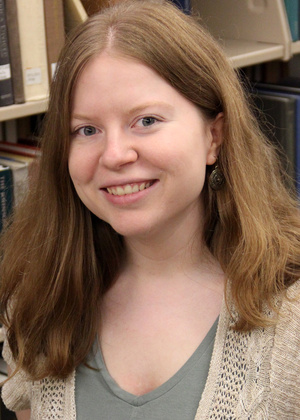
I’d love to talk about your work at Purdue. Could you describe your role as archivist for university history?
I started here in 2016 as an outreach archivist, so my focus was really on doing social media and exhibits, talking to people about donations, collections and transfers, and going to events. Eventually the opportunity to be archivist for university history came along, which I think is one of the coolest job titles I've ever heard. I'm very lucky to have it.
A big part of my job now is teaching students how to do archival research and use primary sources. That includes people in classes working on assignments, but also student clubs that want to preserve their histories, and other individuals — maybe their great grandfather went to the university, and they want to learn more about his time on campus. I think it's really important to show that archives are open and available and accessible as a resource for people. Archives aren’t trying to be hidden away or difficult to use.
Do you have students who, once they have that initial interaction with the archives, end up returning throughout their college careers?
We do. I see some repeat customers. I've also hired several students who've been in my classes, who then ask about student employment in the archives. And some of those students have gone on to library school and followed through with careers in archives or libraries or museums, and a lot of that comes down to that initial exposure. It really is so important.
What advice do you have for current students of archives and library science at UMSI?
If you're interested in something, find somebody who does it and ask them questions. Almost every archivist or librarian I know is ecstatic if somebody reaches out to them and says, “I want to be you when I grow up. Tell me, what's your background? What training did you pursue? Do you have any opportunities to talk about?” It can be really daunting to think about applying to jobs and finding opportunities and figuring out if you have the skill set you need to succeed in a really competitive field. Most people are more than willing to give advice.
What impact do you hope to have across your career?
This might sound strange, since we're talking about the fact that I was just on television. I feel like the purpose of an archivist is not to get attention for themself. It's just to make sure that other people can do what they need to do. For example, I'm making a finding aid so that another person can do their research and write a book. Or I'm making sure that these students know how to do research so they can then go on and do their own amazing chemistry experiments and build on what's been done in the past. So, I take it as a sign of my own success when I can see those outputs from people I have helped.
RELATED