
Schaub: Cookie banners belie digital privacy for website surfers

Monday, 01/31/2022
Cookie banners — those little website pop-up windows that ask if it’s ok to store cookies — were supposed to be a warning system. They provide a detailed privacy policy and a chance for users to make a thoughtful choice about how their personal information is used.
Instead, those pop-ups seem to have done the opposite. The New York Times reports that the ubiquitous banners left people numbly clicking “accept”, without really thinking about the consequences.
Florian Schaub, assistant professor of information at the University of Michigan School of Information, says that the quick click to get rid of a cookie banner isn’t a clear agreement to give up privacy.
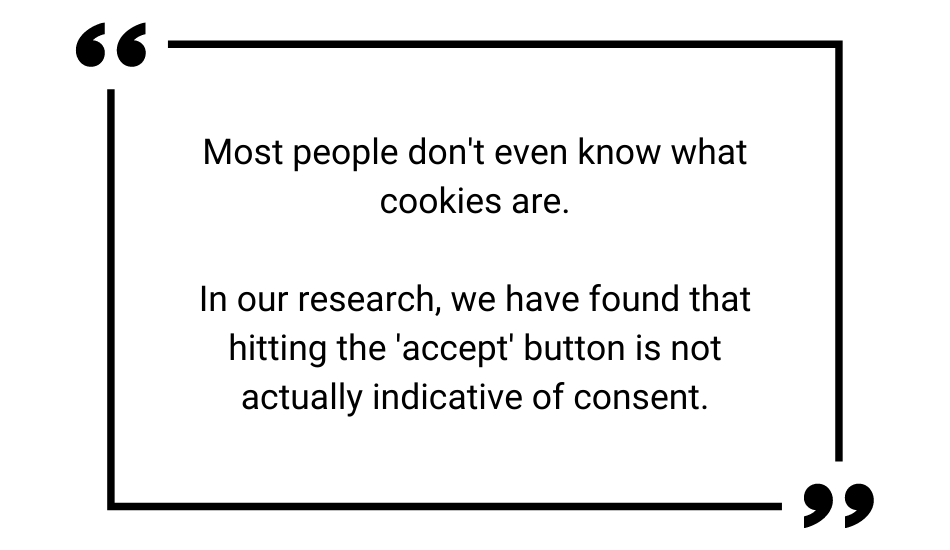
By agreeing to allow cookies, users are also allowing their data to be collected. The sparse, or sometimes misleading banner, doesn’t always spell out the risks. Other times, users just click accept because they look at the online experience as a “digital resignation” — they know that their data is being collected, but don’t see a way around it.
Some experts are arguing for a more transparent system to protect digital privacy. Ditch the cookies and instead, allow users to clearly see how their information is being used, and by whom. Until then, cookie banners remain the best (and worst) line of defense in digital privacy.
Schaub is a privacy expert, who researches human-computer interactions, usable privacy, security, and ubiquitous computing. Recently, he appeared in Reuters and WXYZ Detroit where he shared his expertise in all things privacy. Schaub was recently a co-organizer of the Privacy@Michigan events, which highlighted the risks in your personal digital data and how to keep yourself safe.
Read “How Cookie Banners Backfired” on nytimes.com.
Learn more about Assistant Professor Florian Schaub.